SCULPTURAL OBJECTS
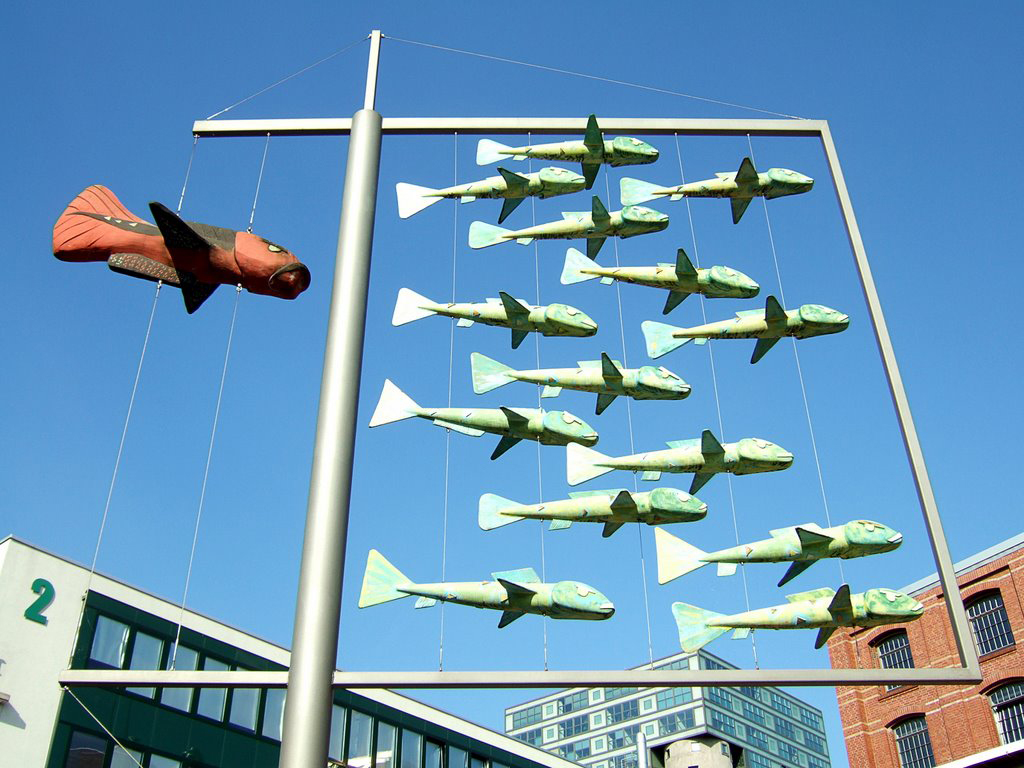
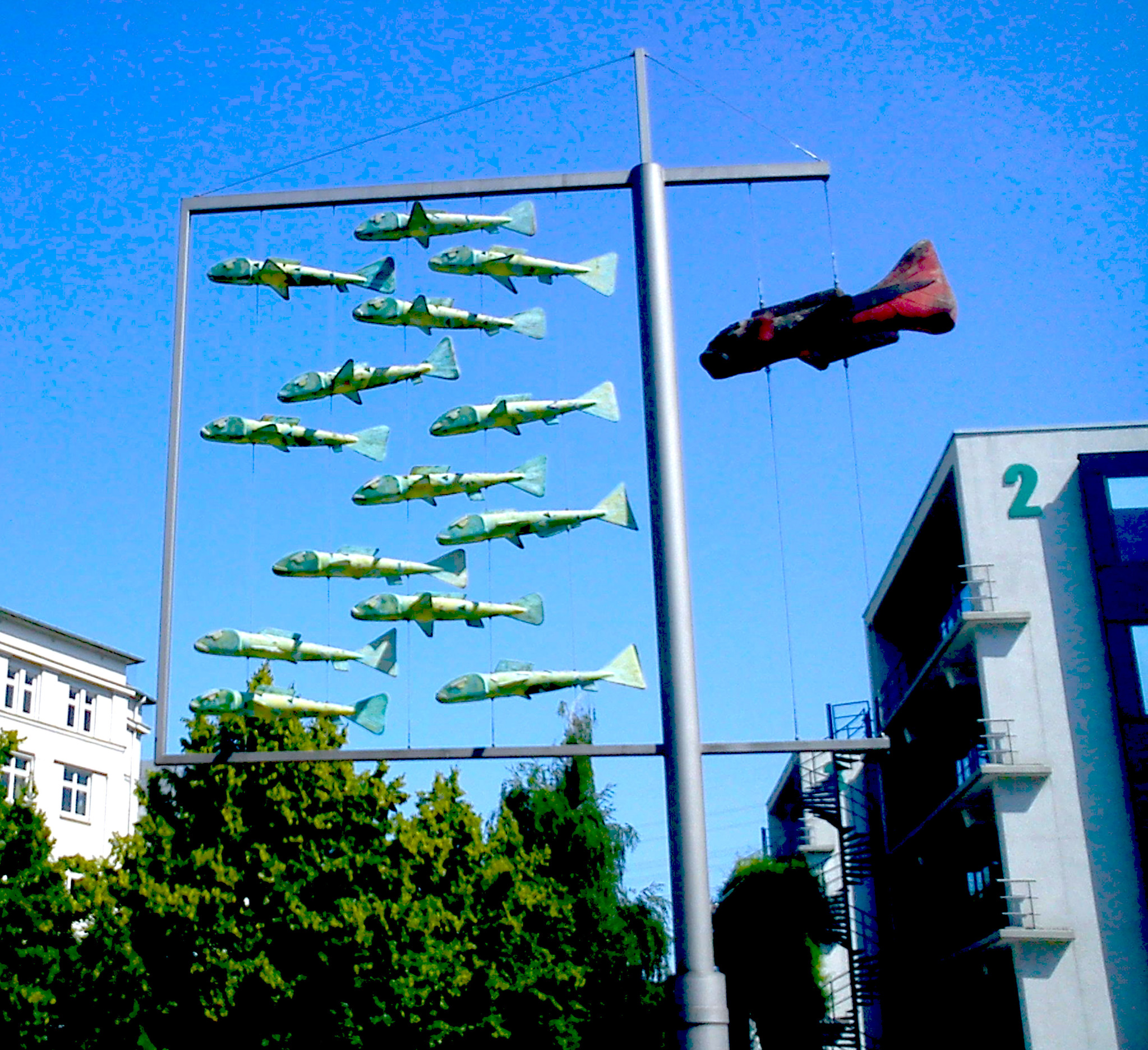
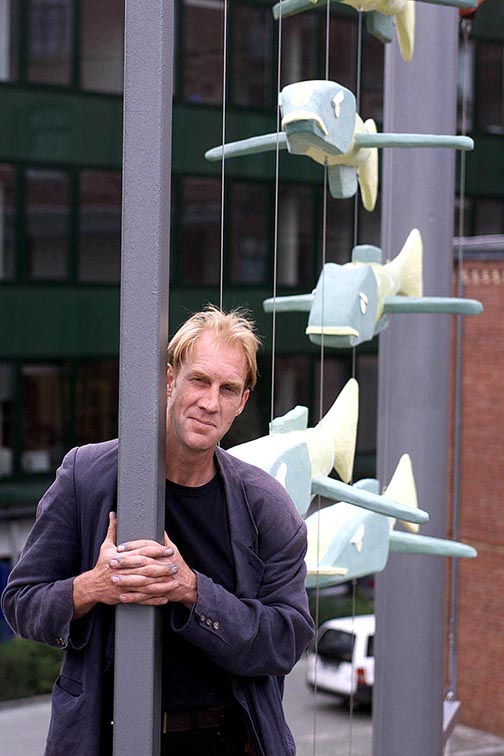
Mahlzeit began long before the commission, with a walk through a coastal forest on a spring day. I was on my way down to the beach. The new leaves had just opened, and as I looked up into the crowns of the trees, light flickered through them and the leaves moved above me like a huge shoal of fish.
It was not a question of putting fish where they did not belong. It was closer to diving and looking up from below the surface, watching fish pass overhead through blue, moving water. Or standing on the rim of a crater after rain, looking down through green light into a deep landscape where animals move like tiny particles inside an emerald. In such moments, the world is not arranged by category. It is arranged by depth, light, movement and scale.
Out of that came Flying Fish. Around forty fish, each approximately two metres long, suspended high in the forest from cables, directly on the coast. The forest had already become a kind of overhead water. The fish simply followed what the seeing had found there.
Some time later, the owner of a building company in Hamburg saw that installation. He had a good eye for art, and the company site already contained sculptures and interesting architectural elements. We began talking about whether a related work could function on his company grounds, either hanging from a high bridge between two buildings or standing freely.
I showed him my mast works, where objects acted like sail areas. Mounted on bearings, they would turn with the wind and, most importantly, turn out of the wind when a storm was blowing. That became crucial, because this was no longer a small suspended work. We were dealing with a moving surface roughly six metres wide and four to five metres high.
I began making sketches, while his engineers began calculating. In the end the work required an eight-metre mast, around 60 cm in diameter at the base, with bearings, and a counterweight of approximately 1.5 tons on the opposite side of the fish. The commission took about a year to complete.
On one side I built thirteen fish, each about two metres long. On the other side I welded together plates and heavy pieces of steel and wrapped them in concrete. That was the “big fish”. The hidden mass that made the visible movement possible. I often wondered whether the owner realised that I had noticed the situation. Being the little fish working for the big fish was also a dangerous adventure. And Mahlzeit was a dangerous undertaking.
The work had no title until the day it was installed. Cranes lifted the pieces into place; everything was fixed, balanced and tested. Then we stepped back and watched this huge structure begin to move in the lightest wind. It was extraordinary. A shoal of fish, born from leaves, water, depth and light, now translated into steel, concrete, mast, bearings and wind.
We stood there looking at it and talked about a title. The owner said, “Mahlzeit.” And we laughed.
In German the word is used like “bon appétit,” a small blessing before enjoying a meal.